5 min read
Top 8 data management challenges for organizations

When it comes to data-driven working, few organizations would not aspire to it. However, there are always a few bumps on the road to “Data Valhalla”. Data-driven working thrives on a solid foundation for your data, and that is where Data Management comes in. This blog looks at some of the barriers you encounter in Data Management and how to break through them.
#1 Shortage of knowledge and manpower
 When talking about Data Management, many of us will think of Data Warehouses and ETL (Extract, Transform, and Load), one of the ways to fill a Data Warehouse. The ins and outs of setting up a DWH require specialist knowledge and experience that are scarce, and current labour market conditions only make that scarcity worse.
Where in the year 2000 you could still shout “Developers! Developers! Developers!”, you now want to deploy those scarce people where they can really make a difference.
#2 Long lead times
 When you want to meet new requirements from the organization, you don't want to be able to deliver only in the next calendar year. Yet that is often the reality when you have a complex landscape of tools, or have to operate across many links in the chain. The result is often that the business solves it themselves, leading to a new pipeline built on other tools.
#3 Patchwork of tools
 The more traditional Data Management setup is often a hodgepodge of all kinds of systems, software and stopgap solutions that have since become permanent: a patchwork of tools. Because data platforms often grow organically and are not always set up according to a predetermined plan, at some point it becomes harder and harder to integrate and manage new sources and technology.
#4 Overview and data lineage
 When problems are reported, when new people join a team, when you want insight across the full breadth of your platform: these are all moments when a patchwork of tools works against you in keeping an overview. Where does the data in this report come from? How is this calculation put together? Which user accounts have access to this financial data? You would expect to be able to answer these questions easily, but reality is often different.
#5 Error-proneness
 Even though everyone does their best, people are not able to deliver perfect work all the time. A copy-paste error or some other forgotten detail is always lurking. When you configure systems by hand and develop code to handle your Data Management, you have to take human nature into account.
#6 Documentation
 Everyone enjoys developing new things and making improvements, but motivating people to record it all in documentation is harder. In today's world, continuous change is also a given, which means manual documentation simply can no longer keep up.
#7 Updates
 The world doesn't stand still, and neither does the tooling you use in your Data Management landscape. Vendors are increasingly moving to short-cycle releases, which can mean you have to continuously apply updates to your infrastructure and application landscape. This may force you to adapt code or scripts to new versions of tooling, or to make changes to safeguard the security of your platform. The more you develop by hand, the more dependencies you build in that can become a problem when you need to update things.
#8 Future-proofing
 At the start of a project to build your data foundation, it can be hard to estimate which resources you will need. Ideally you want enough not to be held back, but not so oversized that costs become a problem. And once you have made a choice, you also want to be able to change it if that later proves necessary. Cloud services and virtualization are solutions that make things scalable, but what if you want to move from a database to a lake? That may well mean starting over, resulting in a long project.
The solution
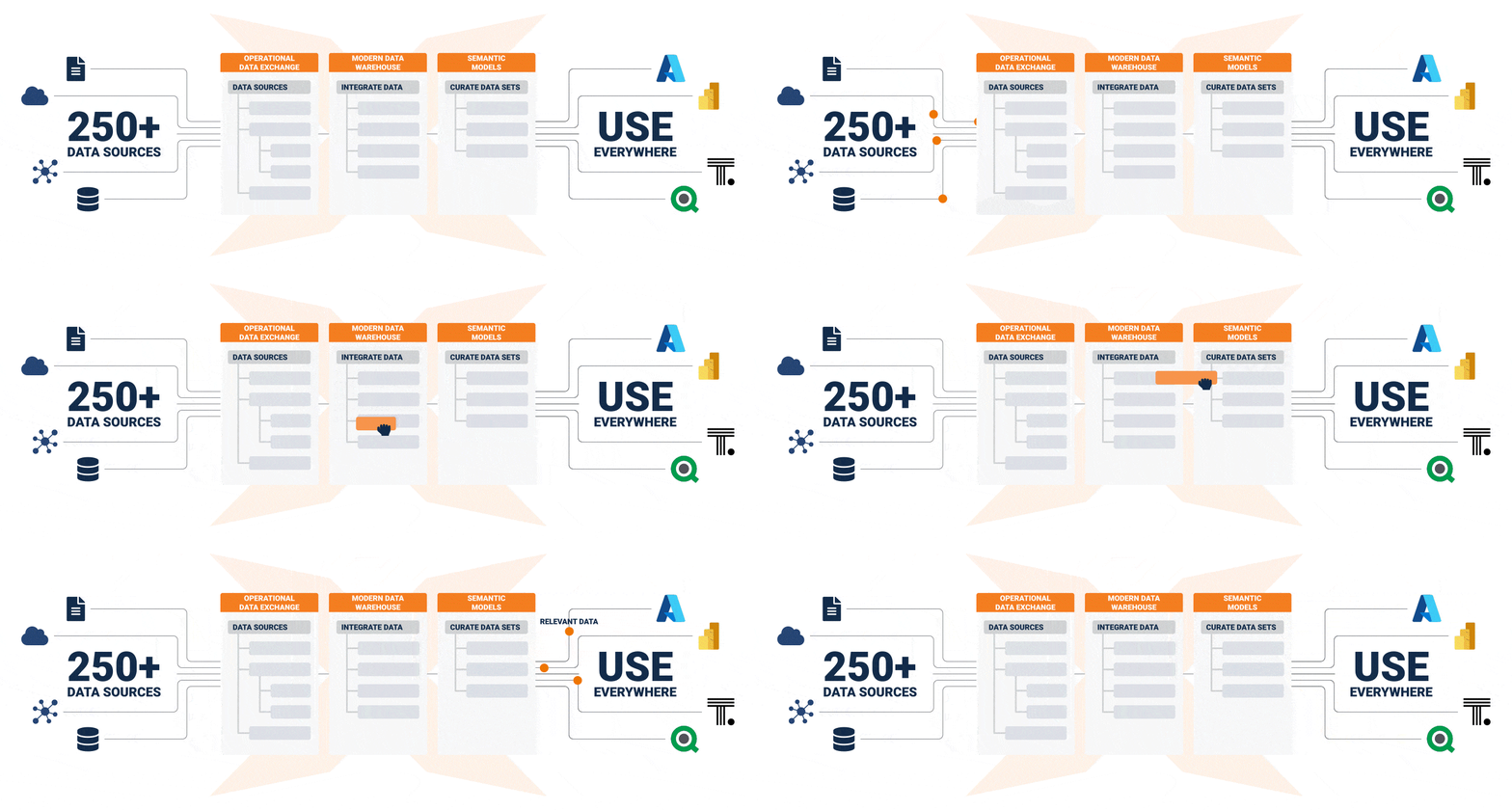 Fortunately, within the field of Data Management there is a solution that makes these challenges less challenging: TimeXtender. TimeXtender is a central orchestrator for a Data Platform that aims to automate as many of the tasks you need to do as possible. Because TimeXtender works via drag-and-drop as much as possible, you focus much more on what needs to happen rather than how. TimeXtender automates the infrastructure you have available and can therefore oversee how your entire platform fits together.
Because TimeXtender generates scripts from your project, you suffer far less from the usual mistakes that creep in when you have to write code by hand. Changing infrastructure also has no far-reaching consequences, because TimeXtender, for example, generates code that matches the version of SQL Server you will be working with.
TimeXtender uses metadata to generate all code and infrastructure, and this metadata is also used to create up-to-date documentation and gain insight into lineage. With TimeXtender's capabilities, you can automate and manage your data flows from your source systems all the way to the back end of your BI tooling. Because as many tasks as possible are automated, the learning curve is a lot flatter than with other tools, so people with knowledge of the business processes can also find their way.
Next steps
Do you recognize these obstacles and are you curious how TimeXtender can remove them for you? Join a live demo and experience it yourself! Would you rather read more about experiences with TimeXtender first? Then take a look at one of our reference cases below.






Stay up to date
Don't want to miss a blog? Then sign up for our newsletter. You'll receive all the latest content straight to your inbox every month. You can sign up using the button below.

Written by

Ruairidh Smith