3 min read
The 5 problems of Excel

Many companies struggle to make (central) company data available. As a result, employees have only limited options for analyzing business data. The consequence is that they start working with Excel spreadsheets themselves in order to still create analyses and reports. The lack of access to (central) company data leads to the development of many different Excel spreadsheets, which are then stored in local databases. This creates a proliferation of Excel files and a loss of data quality. The business needs more reliable and faster answers, without complicated constructions in Excel or dependence on the IT department.
The 5 problems
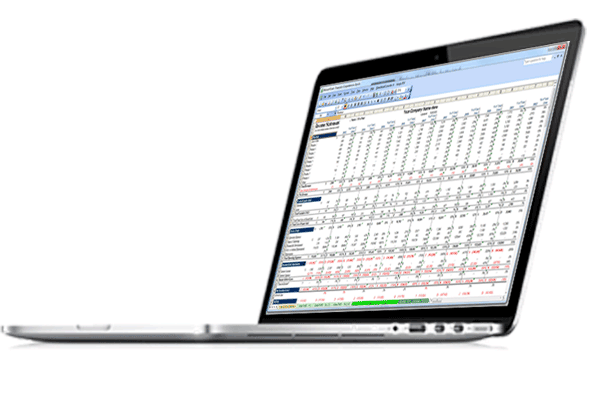 When you start running analyses with spreadsheets, you embark on a very cumbersome and error-prone process. And it is not just one person, but several people in an organization who will be working on it. This creates multiple versions of the truth within the company. In addition, others don't dare touch the Excel file for fear of accidentally deleting a complex formula. As a result, the company misses out on opportunities for collaboration and new insights.
Of course, the spreadsheet will tell people quite a bit about the business. But when you compare the amount of time and, above all, effort that goes into building such a spreadsheet with the business value it adds, the two don't keep pace. The same tasks can be done with enormous speed, ease, security and governance using Business Intelligence tools. The problems of working with Excel (to create reports and analyses) can be summarized in this top 5:
The 5 problems of Excel
1 Multiple versions of the truth due to a lack of version control
2 Error-prone: if something goes wrong, important reports can be delayed and money can be lost
3 Performance problems; sudden 'Excel has stopped working' messages
4 Colleagues don't dare touch the complex constructions in the spreadsheet
5 Not all colleagues are equally experienced with Excel
The future
What used to work in Excel no longer cuts it today, and certainly won't in the future. The business wants answers, and wants them as fast as possible. Waiting weeks for a report is no longer feasible and will even cost money. This means tools must be deployed to make ad hoc analyses a reality. According to Gartner (Gartner 2015 Magic Quadrant for BI and Analytics Platforms), organizations' need to handle larger volumes of data will only continue to grow. This means the tools used for analysis will have to cope with this increase, at the speed the business requires.

Choosing good BI
Switching to a different Business Intelligence tool, or getting started with one, doesn't have to mean a complex and lengthy implementation. With Qlik's Business Intelligence software, a complete dashboard can be ready for use within a few days. With just one version of the truth, while people can still get started on their own. Qlik Sense is so simple that you simply drag and drop your data into the app. After that, you drag in the visualization you want, and within minutes you have a complete, dynamic dashboard to click through and analyze. Completely on your own.
Curious about Qlik Sense and want to experience for yourself how easy it is?
Then download the Qlik Sense Desktop software completely free of charge from the Qlik website.
Stay up to date
Don't want to miss a blog? Then sign up for our newsletter. That way you receive all the latest content in your inbox every month. You can sign up using the button below.
